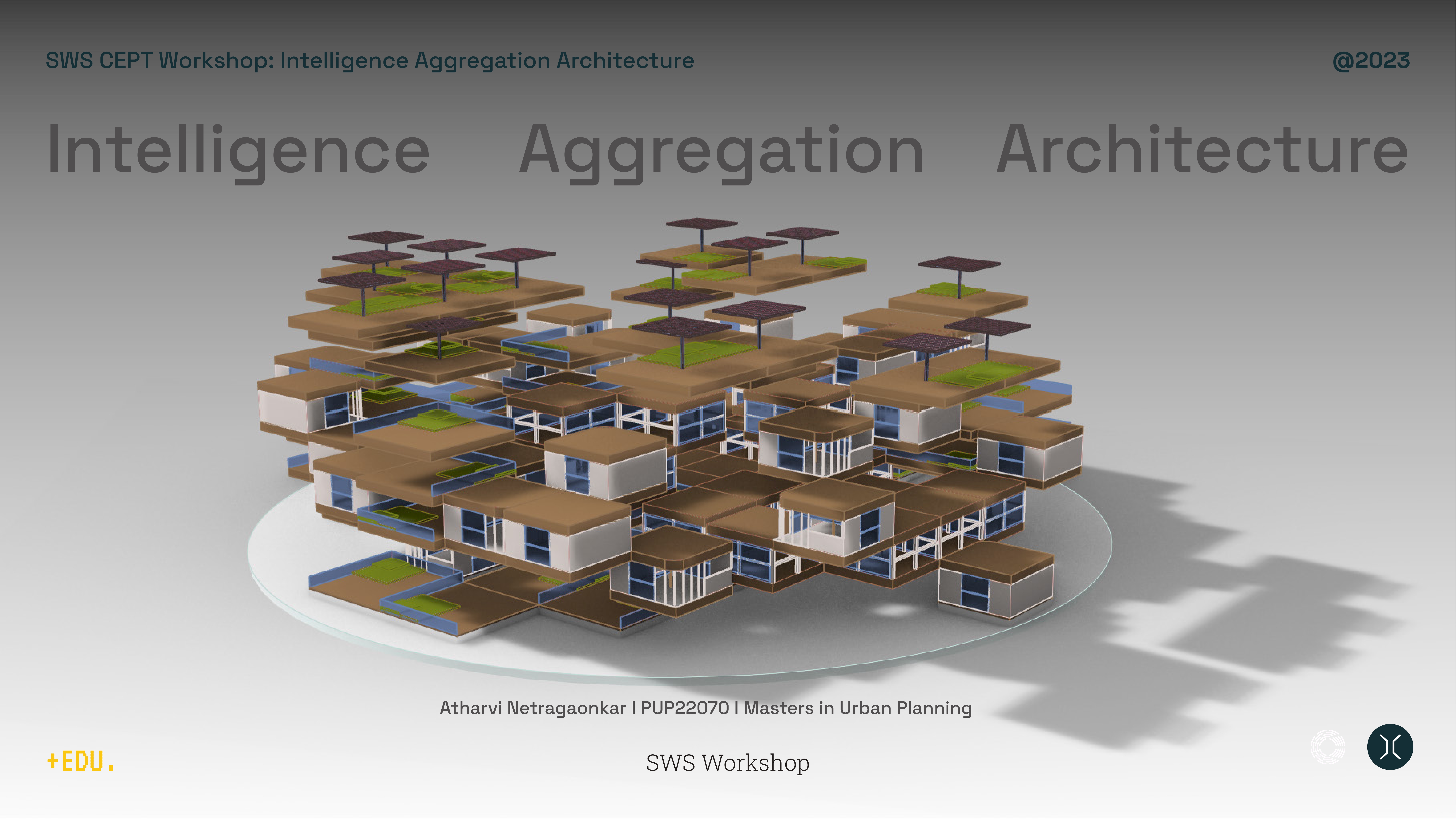
Intelligence Aggregation Architecture
As a part of the Summer Winter School (SWS) at CEPT University, the workshop Intelligence | Aggregation | Architecture: Resilient Floating Communities, conducted by INTAGG ARCH (Intelligent Aggregate Architecture by Code in Parametric Architecture) and coordinated by Nora Fankhauser and Mohammed Saifiz, explored the intersection of computational design, urban resilience, and adaptive habitation systems in response to the growing challenges posed by climate change and rising sea levels.
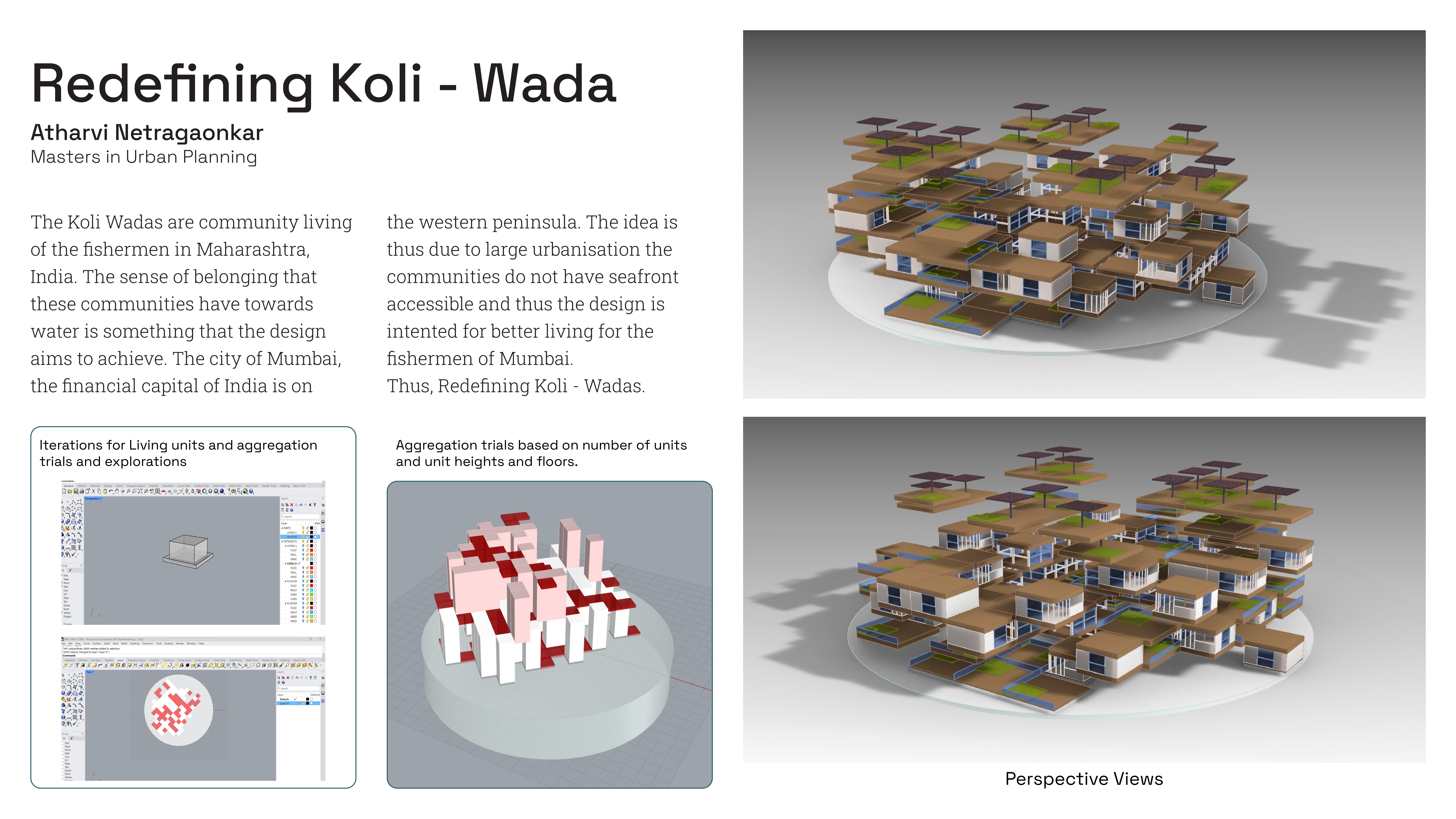
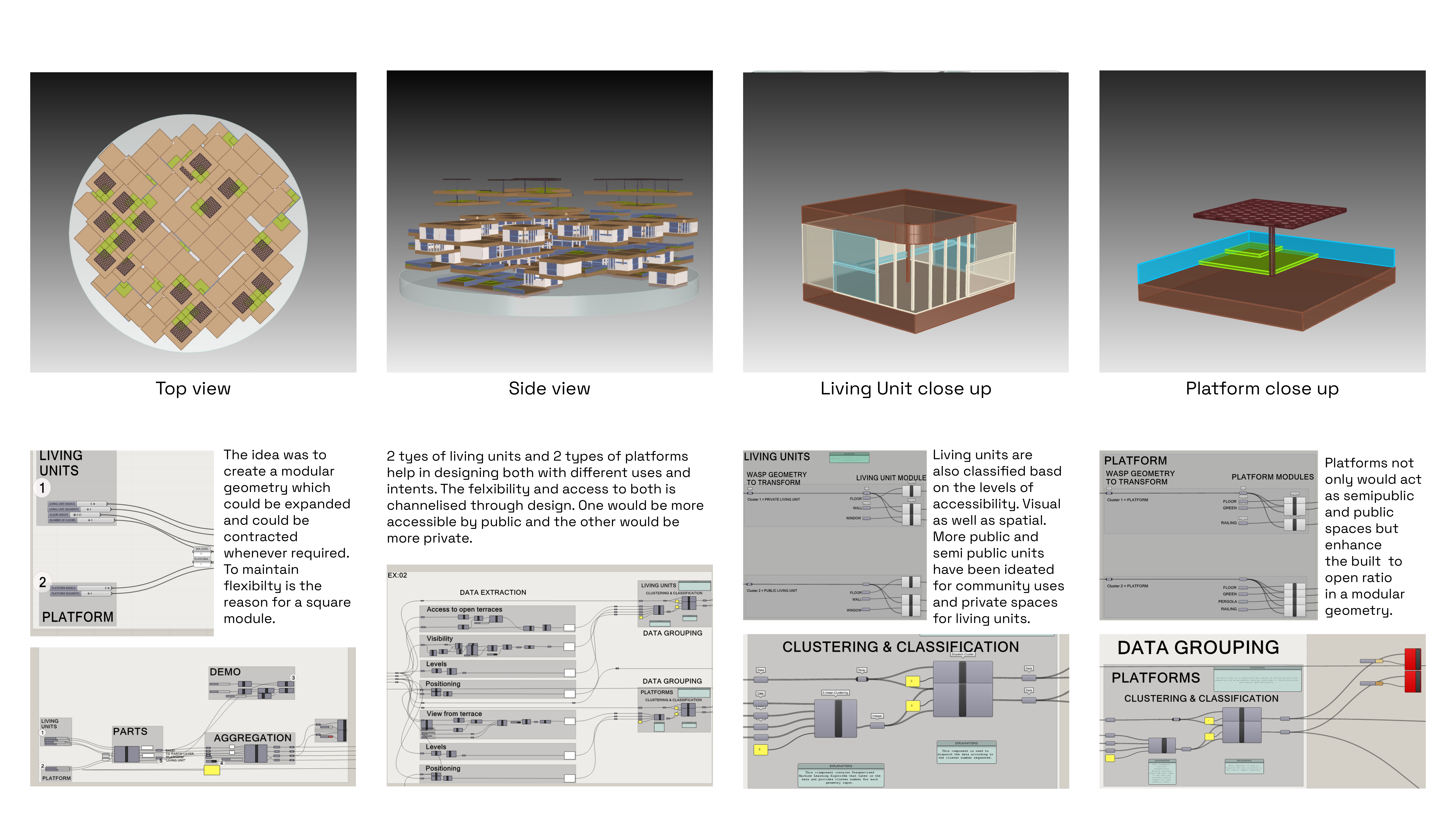
The workshop focused on developing innovative models of floating communities through an intensive investigation of aggregation principles, parametric workflows, and modular architectural systems. Participants examined how individual living units, shared community spaces, and infrastructural platforms could be intelligently combined to create larger settlement networks capable of evolving over time. The studio emphasized design as a process of continuous iteration, where computational tools enabled the exploration of multiple spatial configurations, relationships, and growth patterns.
The central design exercise reimagined Mumbai's Koliwada settlements, recognizing their rich cultural heritage, strong community bonds, and deep dependence on the waterfront economy. Rather than treating climate vulnerability as a condition requiring relocation, the project sought to envision strategies that would allow these communities to remain connected to their traditional livelihoods while adapting to future environmental uncertainties. Through the design of floating living units and interconnected communal platforms, the proposal explored new forms of resilient urbanism that could respond dynamically to changing water levels, ecological conditions, and community needs.
A key aspect of the workshop was understanding architecture not as isolated buildings, but as an interconnected system of parts capable of aggregation into larger collective structures. The study investigated how simple modular components could generate complex spatial organizations, creating adaptable neighborhoods that balance privacy, social interaction, resource sharing, and environmental performance. By integrating computational intelligence with principles of collective living, the workshop demonstrated how emerging design technologies can contribute to the creation of sustainable, resilient, and community-centred futures for vulnerable coastal settlements.
The outcome was a speculative yet research-driven vision for resilient floating communities that combined parametric thinking, adaptive urban systems, and culturally sensitive design approaches to address some of the most pressing challenges facing coastal cities in the twenty-first century.