Research on Vastu Shastra Explores Its Relevance in Contemporary Residential Design
Pune, Maharashtra, 2023: A research paper titled “Investigating the Relevance of Use of Vastu Shastra in Interior Designing of Residential Spaces”, authored by Falguni Prasad Joshi, was published in the proceedings of the National Conference on Built Environment and Beyond 2.0: Theory, Practice and Pedagogy under Track 3: Technology and Allied Disciplines. The study explores the continued significance of Vastu Shastra in contemporary residential design and its influence on creating healthier, more livable, and environmentally responsive homes.
The research investigated public perceptions regarding the application of Vastu Shastra in residential spaces through a structured survey involving respondents from diverse age groups and professional backgrounds. The study examined awareness levels, user experiences, and the perceived benefits of incorporating Vastu principles into home design.
The findings indicate a high level of awareness and acceptance of Vastu Shastra, with respondents associating Vastu-based planning with improved natural light and ventilation, enhanced livability, emotional well-being, positivity, and a stronger connection between built spaces and nature.
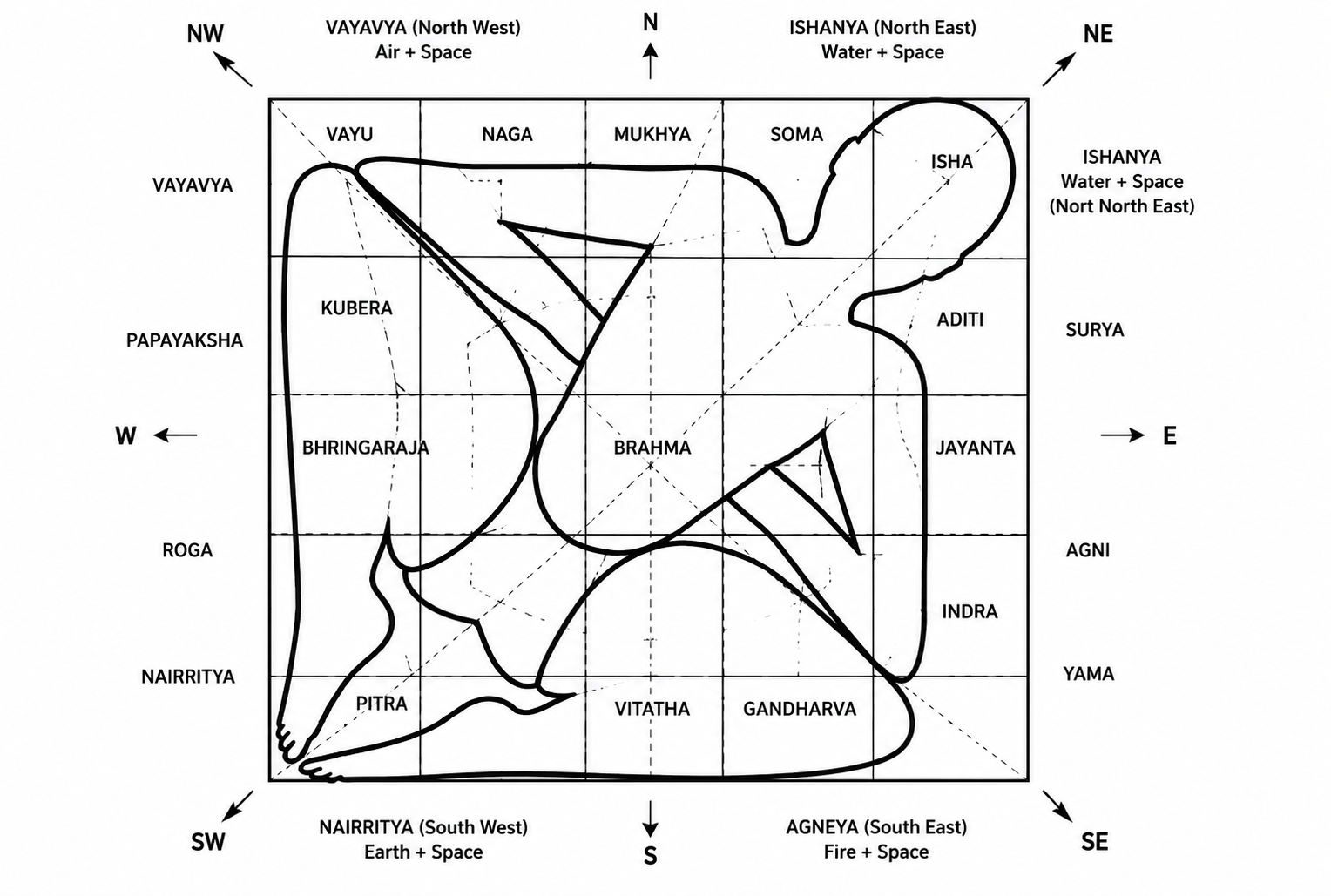
The study highlights that Vastu Shastra is increasingly viewed not merely as a traditional belief system but as a planning approach that integrates environmental responsiveness, spatial organization, and human comfort. It further suggests that concepts such as cardinal directions, Vastu Purusha Mandala, and the integration of natural elements continue to influence residential planning decisions.
Aligned with the objective of creating sustainable and people-centric living environments, the research concludes that a basic understanding of Vastu principles can positively contribute to residential design, enhancing livability, environmental quality, and harmony within homes. The study offers valuable insights for architects, interior designers, researchers, and homeowners seeking to create meaningful and responsive living environments.