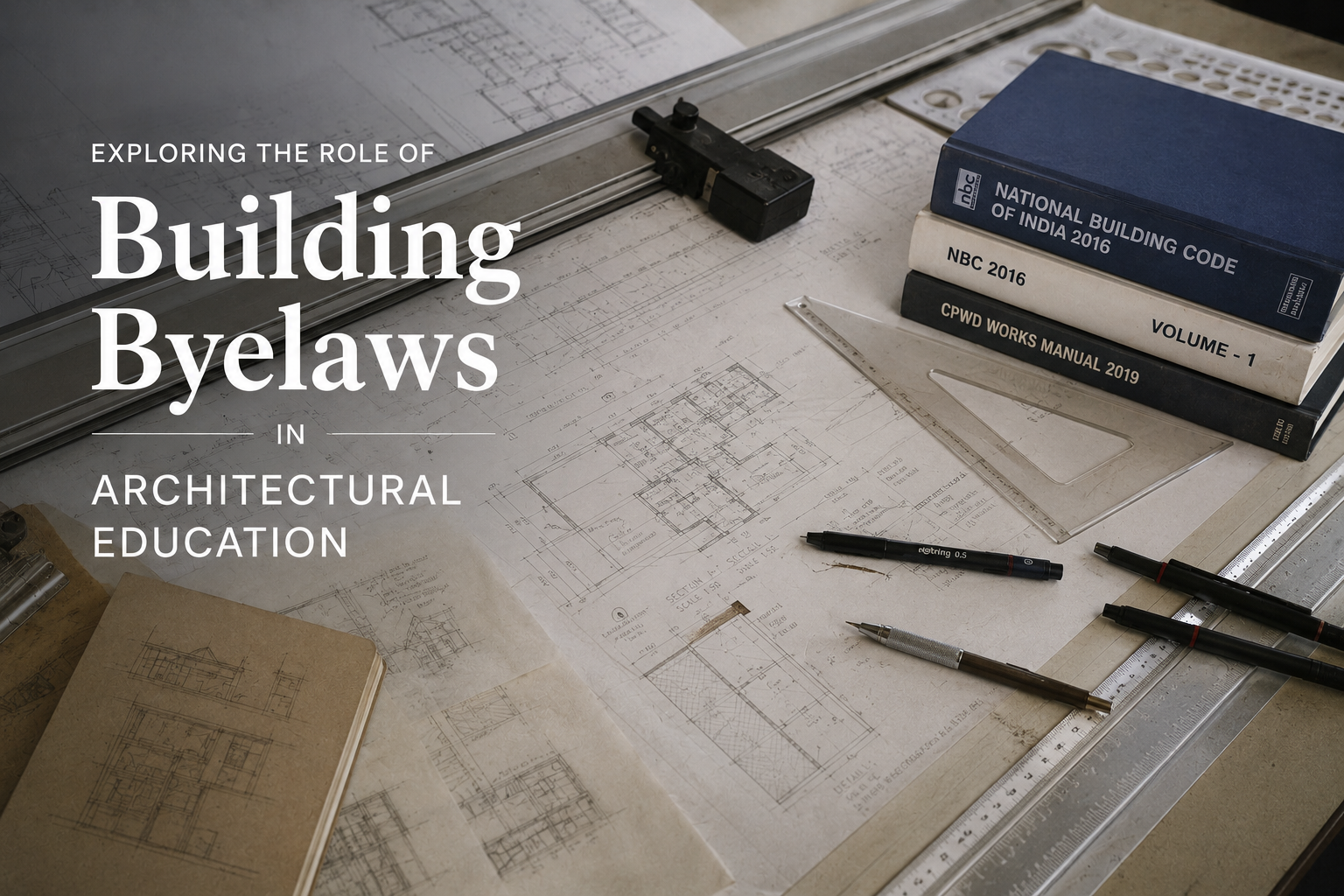
Research Examines the Role of Building Bylaws in Architectural Education
A research study titled "The Role of Bylaws in Architectural Pedagogy" by Ar. Atharvi Paras Netragaonkar, Architect and Urban Planner, has highlighted the growing importance of building regulations as educational tools within architectural training.
The study explores whether building bylaws should be viewed solely as regulatory requirements or as instruments that can positively influence design thinking and professional preparedness among architecture students. Conducted through a review of academic literature and an analysis of housing studio projects in colleges affiliated with Savitribai Phule Pune University (SPPU), the research examines how students engage with development control regulations during the design process.
The findings suggest that when introduced effectively, regulations such as Floor Space Index (FSI), setbacks, parking provisions, and open-space requirements can support rather than restrict creativity. The study notes that understanding these parameters helps students develop practical, context-responsive, and sustainable design solutions while preparing them for the realities of professional practice.
The research further emphasizes that the challenge lies not in the regulations themselves but in the way they are incorporated into architectural education. It advocates a balanced approach where students are gradually introduced to increasing levels of regulatory complexity as their academic projects evolve.
Published in 2024, the study contributes to ongoing discussions on strengthening architectural pedagogy and bridging the gap between academic learning and professional practice. The research concludes that building bylaws should be regarded not merely as compliance mechanisms but as valuable design tools that encourage responsible and informed architectural decision-making.