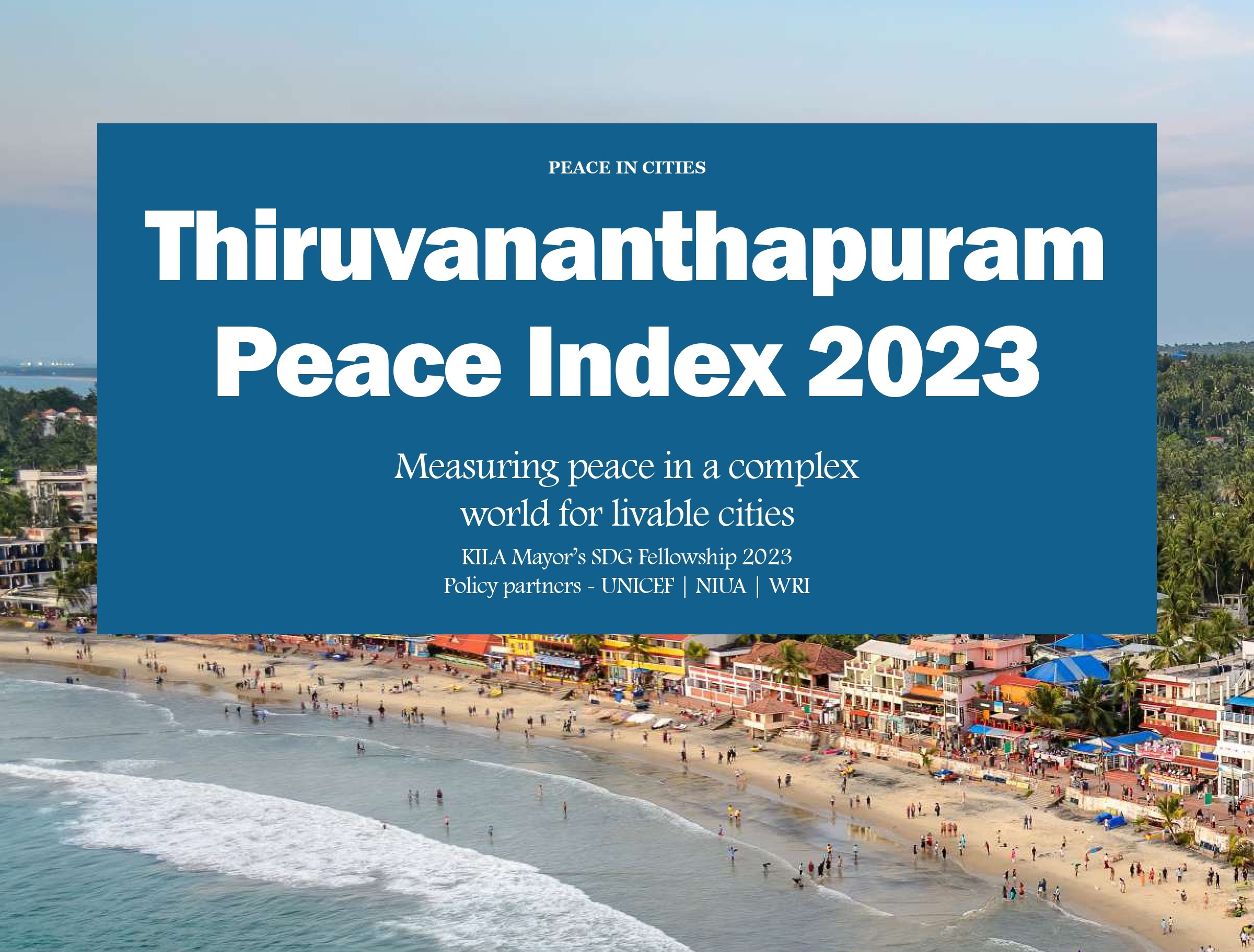
Thiruvananthapuram Peace Index 2023 Proposes New Framework for Measuring Urban Livability
A study published in Planning Times has highlighted an innovative approach to measuring peace within cities through the Thiruvananthapuram Peace Index (TPI) 2023, a framework that seeks to redefine peace as a key indicator of urban livability and sustainable development.
Authored by Ar. Atharvi Paras Netragaonkar, Architect and Urban Planner, the study explores how peace can be assessed beyond the absence of conflict by incorporating factors such as social well-being, governance, equality, public participation, and community trust.
Recognized as India's first Peace City, Thiruvananthapuram was selected as a model for developing a localized peace assessment framework. The proposed index recommends evaluating all municipal wards through measurable indicators related to quality of life, democratic participation, social security, health, employment opportunities, and institutional effectiveness.
The research emphasizes that peace should be viewed as a tangible planning objective and measured with the same importance as infrastructure, housing, mobility, and environmental quality. By adopting a ward-level assessment system, the framework aims to encourage community participation, strengthen local governance, and support evidence-based urban planning.
Aligned with the objectives of Sustainable Development Goal 16 (Peace, Justice and Strong Institutions), the study proposes that regular monitoring of peace-related indicators can help policymakers identify challenges, improve civic engagement, and promote inclusive development.
The research concludes that a structured Peace Index can serve as an effective planning tool for cities seeking to enhance quality of life and social cohesion. By placing dignity, well-being, and community participation at the center of urban development, the framework offers a new perspective on building more resilient, equitable, and livable cities.